Russia continues to be a focal point in global geopolitics with its strategic moves and internal developments. From military alliances and economic policies to political shifts, Russia’s actions are shaping the international landscape. This article delves into the latest news and comprehensive analysis of Russia’s current situation, providing insights into their strategic maneuvers and future implications.
Main Points
- 1 Russia’s Alliance with North Korea: A New Military Partnership
- 2 Yulia Navalny’s Presidential Bid: A New Opposition Leader Emerges
- 3 BRICS Summit: A Crucial Platform for Diplomatic Engagement
- 4 Military Operations in Ukraine: Intensified Conflict
- 5 Economic Impact: Sanctions and Strategic Shifts
- 6 Domestic Political Landscape: Shifting Dynamics
- 7 Humanitarian Crisis: International Response and Relief Efforts
- 8 International Diplomacy: Mediating Peace and Stability
- 9 Looking Ahead: Russia’s Future on the Global Stage
Russia’s Alliance with North Korea: A New Military Partnership
In a significant development, Russia has reportedly strengthened its alliance with North Korea. Reports indicate that approximately 1,500 North Korean troops have been deployed to Russia’s far east. These troops are currently undergoing training and acclimatization at military bases near Vladivostok. This move is viewed as a strategic effort by Russia to bolster its military capabilities amid the ongoing conflict in Ukraine.
South Korea’s National Intelligence Service confirmed these developments, raising global security concerns. The alliance between Russia and North Korea is seen as a critical move, potentially escalating the conflict and impacting regional stability.
In a surprising turn of events, Yulia Navalny, the wife of the late opposition leader Alexei Navalny, has announced her intention to run for president. Following Navalny’s death eight months ago in the Polar Wolf prison, Yulia’s decision to enter the political arena has reignited hopes among Russian dissidents. At 48, Yulia Navalny has vowed to challenge President Vladimir Putin’s regime, aiming to lead the fragmented opposition towards significant political change.
Her announcement has stirred mixed reactions. While some see her as a unifying force for the opposition, others remain skeptical about her chances against Putin’s entrenched political machinery. Her campaign will be closely watched as she navigates the complex political landscape of Russia.
BRICS Summit: A Crucial Platform for Diplomatic Engagement
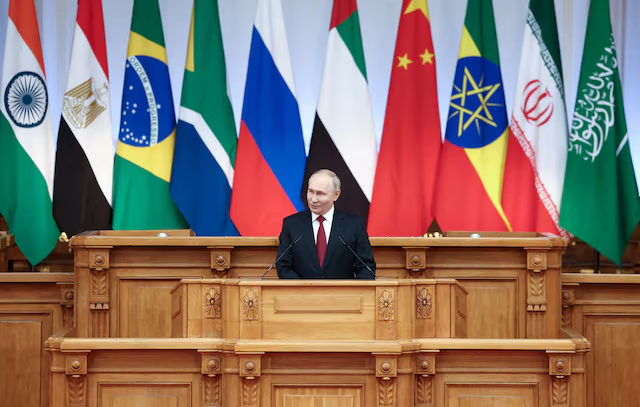
The upcoming 16th BRICS Summit in Kazan, Russia, is set to be a crucial platform for diplomatic engagement. Prime Minister Narendra Modi’s attendance marks his first visit to Russia since July, underscoring the importance of this summit. Iran’s President Massoud Rajavi, a new BRICS member, will also be present, adding to the significance of the event.
The summit provides Russia with an opportunity to engage with key global players and seek diplomatic solutions amid increasing isolation due to its actions in Ukraine. Peace talks and economic collaborations are expected to be high on the agenda, with hopes of mitigating the ongoing conflicts.
Military Operations in Ukraine: Intensified Conflict
The war in Ukraine continues to dominate headlines, with Russia’s military operations showing no signs of abating. Now in its 967th day, the conflict has seen intensified battles, particularly in eastern Ukraine. The deployment of North Korean troops adds a new dimension to the war, heightening tensions and raising fears of further escalation.
Russian President Vladimir Putin remains steadfast in his commitment to the military campaign. Despite heavy casualties and international condemnation, the Kremlin’s resolve to continue the conflict is unwavering. The ongoing war has resulted in widespread destruction and displacement, profoundly impacting the region.
Economic Impact: Sanctions and Strategic Shifts
Western sanctions continue to cripple the Russian economy, targeting key sectors such as energy, finance, and defense. The sanctions have led to a decline in GDP, increased inflation, and further isolation from the global economy. In response, Russia has sought to strengthen economic ties with non-Western countries, including China and India, as part of a broader geopolitical strategy.
These alliances are seen as crucial for Russia’s economic survival. The country’s ability to navigate the economic challenges posed by sanctions will be critical in determining its future trajectory.
Domestic Political Landscape: Shifting Dynamics
Russia’s domestic political landscape is undergoing significant shifts. The death of Alexei Navalny and Yulia Navalny’s emergence as a potential presidential candidate have shaken the political establishment. The opposition, though fragmented, sees Yulia’s entry into politics as a possible unifying force.
President Putin’s grip on power remains strong, but growing discontent and economic hardships pose challenges to his regime. The upcoming elections will be a pivotal test for the ruling party, determining the future course of Russian politics.
Humanitarian Crisis: International Response and Relief Efforts
The humanitarian crisis resulting from the conflict in Ukraine has prompted a global response. Countries and organizations are providing aid to those affected, with the United Nations and various NGOs playing crucial roles in relief efforts. Despite these efforts, the scale of the crisis has overwhelmed available resources, highlighting the need for sustained international support.
Calls for an immediate ceasefire and diplomatic negotiations have grown louder. However, the prospects for peace remain uncertain, with both sides entrenched in their positions.
International Diplomacy: Mediating Peace and Stability
The international community continues to engage in diplomatic efforts to mediate peace and stability. The role of global actors, including the United States and the European Union, will be pivotal in brokering negotiations and facilitating conflict resolution. The BRICS Summit is expected to play a critical role in these diplomatic engagements.
Looking Ahead: Russia’s Future on the Global Stage
The future of Russia and its role in global geopolitics remain complex and multifaceted. The ongoing conflict in Ukraine, strategic alliances with countries like North Korea, and internal political shifts will shape Russia’s trajectory in the coming years. The international community will closely monitor these developments, hoping for a peaceful resolution and stability in the region.